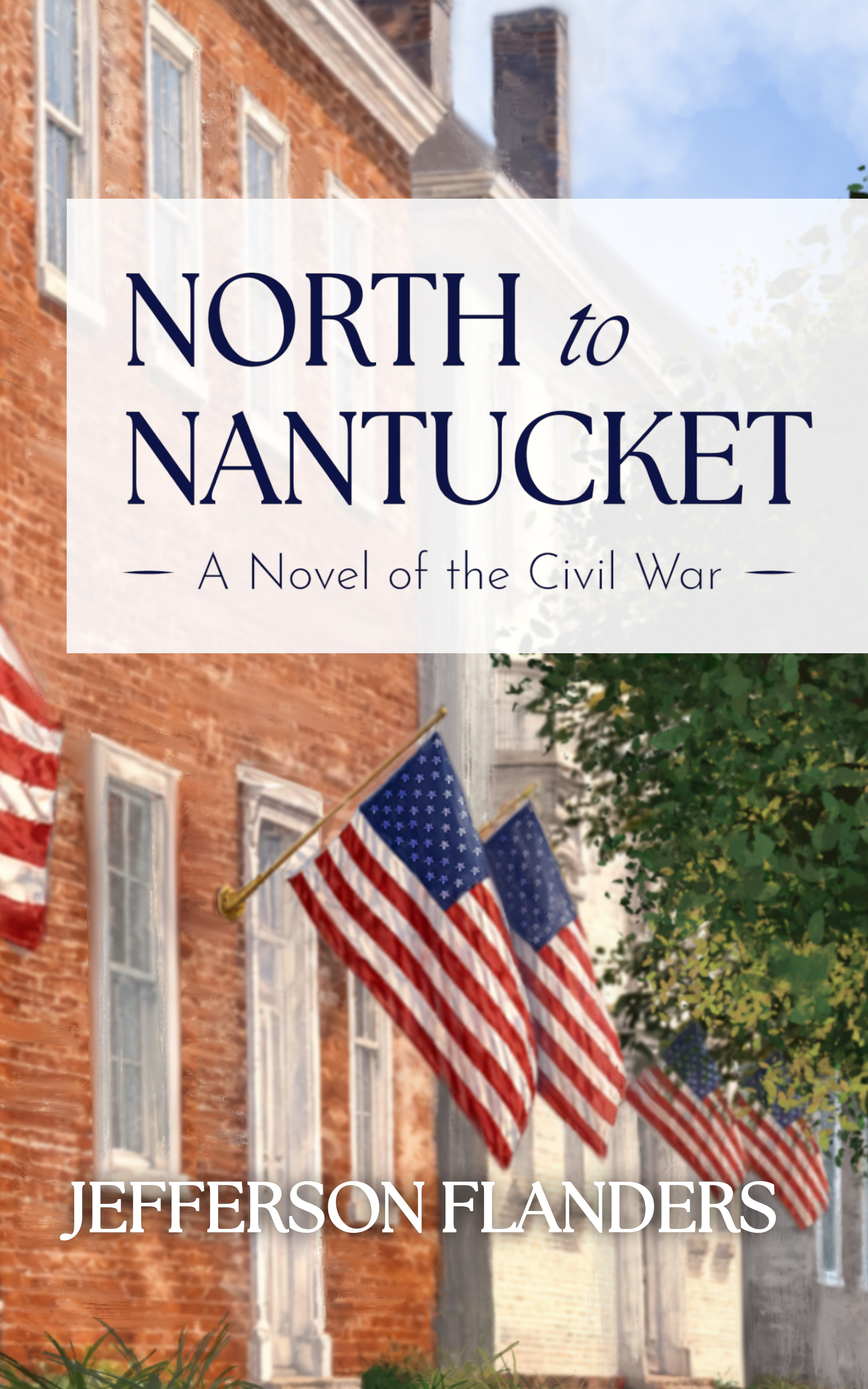
Here are seven questions answered by Jefferson Flanders, author of North to Nantucket.
Q: What inspired you to write about Nantucket’s role in the Civil War?
A: As I’ve noted before, it was a combination of a lifelong interest in the conflict, sparked by a visit to Gettysburg as a boy with my father, and encountering the 73 names on Nantucket’s Civil War memorial and wondering about their stories.
As I began my research, I learned that most Nantucket men had served in the 20th Massachusetts Volunteer Infantry Regiment, which was dubbed the “Bloody 20th” for its high casualty rate (and, later, the “Harvard Regiment” for the large number of Harvard graduates in its ranks).
In the novel, it seemed fitting to have Gabriel North, a Harvard graduate, join the 20th Regiment along with his brother Michael and experience the difficult early years of the war.
I was fortunate to have two deeply researched historical accounts to turn to: Harvard’s Civil War: The History of the Twentieth Massachusetts Volunteer Infantry by Richard F. Miller and The Civil War: The Nantucket Experience by Miller and Robert E. Mooney.
Q: Nantucket sits at the center of the story…
A: Yes, it does. I’ve sought to show how the Civil War profoundly shaped the lives of islanders in the 1860s. In the novel, we see the impact on the homefront through the eyes of Charlotte Hathaway, whose family runs a boarding house. She is deeply tied to the rhythms of island life, and exhibits a quiet courage as her childhood friends go off to war.
Those on both sides of the conflict thought, wrongly, the war would be over quickly. As more young men enlisted, Nantucket became an island of women. It wasn’t the first time that this had happened, for during the whaling years, many of Nantucket’s men were away on voyages of three years, and some were lost at sea. The consequences of the Civil War proved more severe, with families losing fathers and sons, and soldiers returning with lasting injuries.
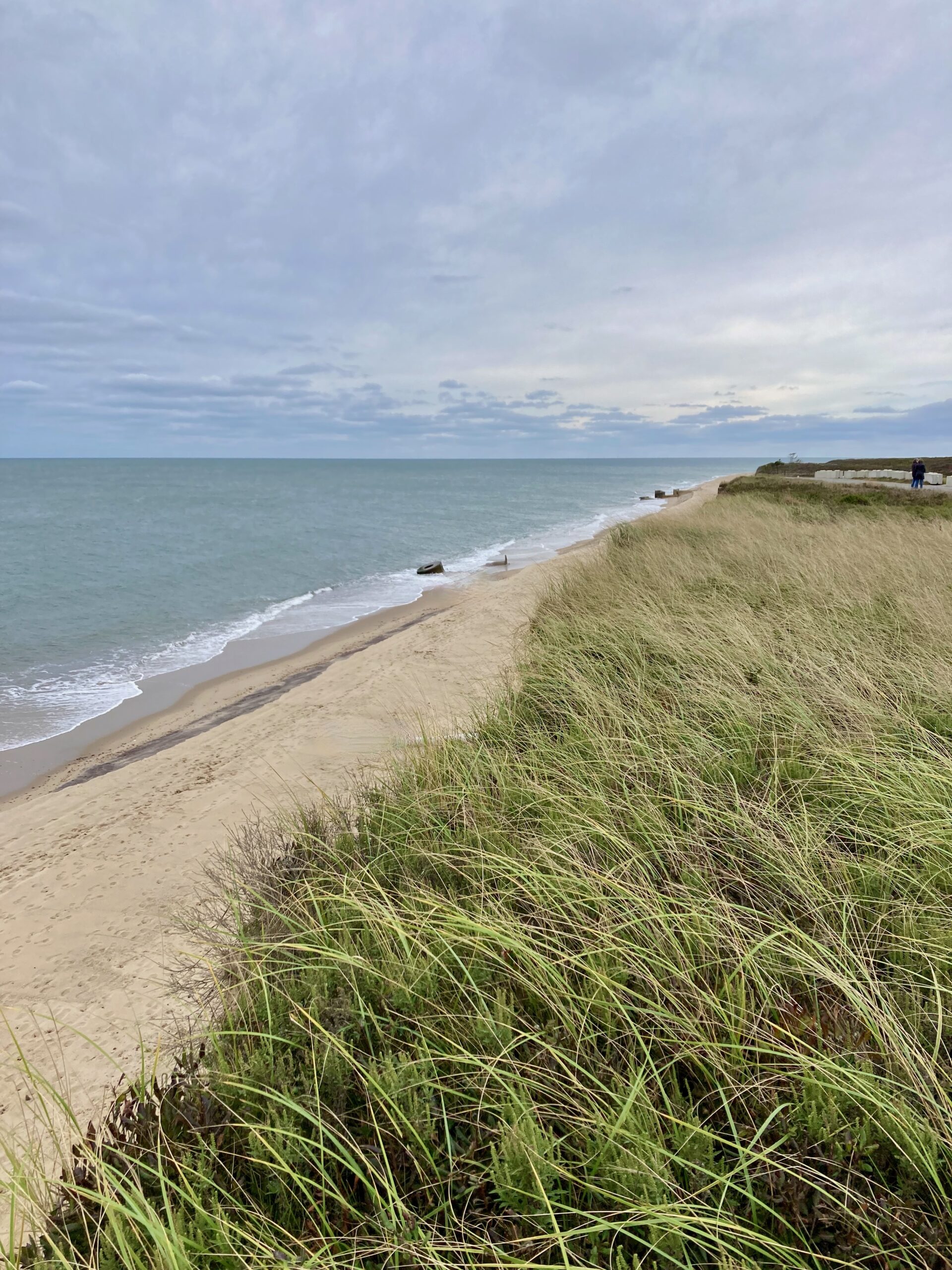
Nantucket wasn’t the summer playground of the wealthy then, as it is today. In the mid-19th century, people made a living from farming and fishing. In North to Nantucket, I sought to capture the insularity of island life, the isolation from the mainland, but also the strong sense of community and the amazing physical beauty of the place. (It’s easier today to explore the out-of-the-way spots in a Jeep with four-wheel drive!). In some ways, Nantucket hasn’t changed, and it’s no wonder that this beautiful and appealing island engenders a deep loyalty.
Q: In researching the novel, what surprised you?
A: I hadn’t realized how unpopular the war was in parts of the North. While Boston remained a center of abolitionism, there were a fair number of anti-war Copperheads there and in other Northern cities. The 20th Regiment also bore the nickname “The Copperhead Regiment” because many of the Harvard officers remained sympathetic to the South, arguing that they had volunteered to restore the Union, not to abolish slavery. It was a shock to learn that Oliver Wendell Holmes, Jr., a future Supreme Court justice, was among the dissenters. And there was considerable working-class opposition to the war from the Irish in Boston and New York, which surfaced in draft riots.
At the same time, I must note the willingness of thousands of young men who were willing to fight and die for the Union and to abolish slavery.
One other discovery: I hadn’t realized that in the summer of 1864, as the Union war effort stalled, President Lincoln thought he was going to lose the election to McClellan and the Peace Democrats. The victories of Sherman in Georgia and Sheridan in the Shenandoah Valley convinced voters to stay the course, that victory over the South was possible, but it was a close-run thing.
Q: This is your 12th novel…
I have been accused of being prolific. But I enjoy storytelling and it seems my books have been well-received by readers.
It helps that I don’t suffer from writer’s block. My time at the Associated Press and as a sportswriter, meeting deadlines, helped cure me of any perfectionism. I’ve learned that “steady does it,” that sticking to a daily writing routine pays off, as does the confidence that you can find a way out of any plot corner that you write yourself into.
I’d like to think that over time I’ve gotten better at my craft, but that may be wishful thinking. A friend who has read all my novels tells me his favorite is Herald Square, my first foray into fiction.
Q: Do you have a favorite?
No, actually, I don’t. I do have favorite characters: Karina Lazda (Herald Square), Feliks Hawes (The Hill of Three Borders, Charles Bridge), Dillon Randolph and Christa Schiller (An Interlude in Berlin), among others. And now, Charlotte Hathaway, a courageous island girl.
It typically takes me a year to finish a novel, which means I spend a considerable amount of time with the characters, imagining their stories. It’s hard at the end to let them go.
Q: What’s next?
I’ve started the research and writing process for my latest project, a sequel to North to Nantucket. I found there were more stories about the war to tell. This next novel will follow the lives of several Philadelphians, including Dr. Conor Fitzpatrick, who appears in North to Nantucket. At my current pace, publication will be in the Spring of 2027.
_______________________________
Copyright © 2026 Jefferson Flanders
All rights reserved