The website of author Jefferson Flanders

Author: admin (Page 11 of 16)

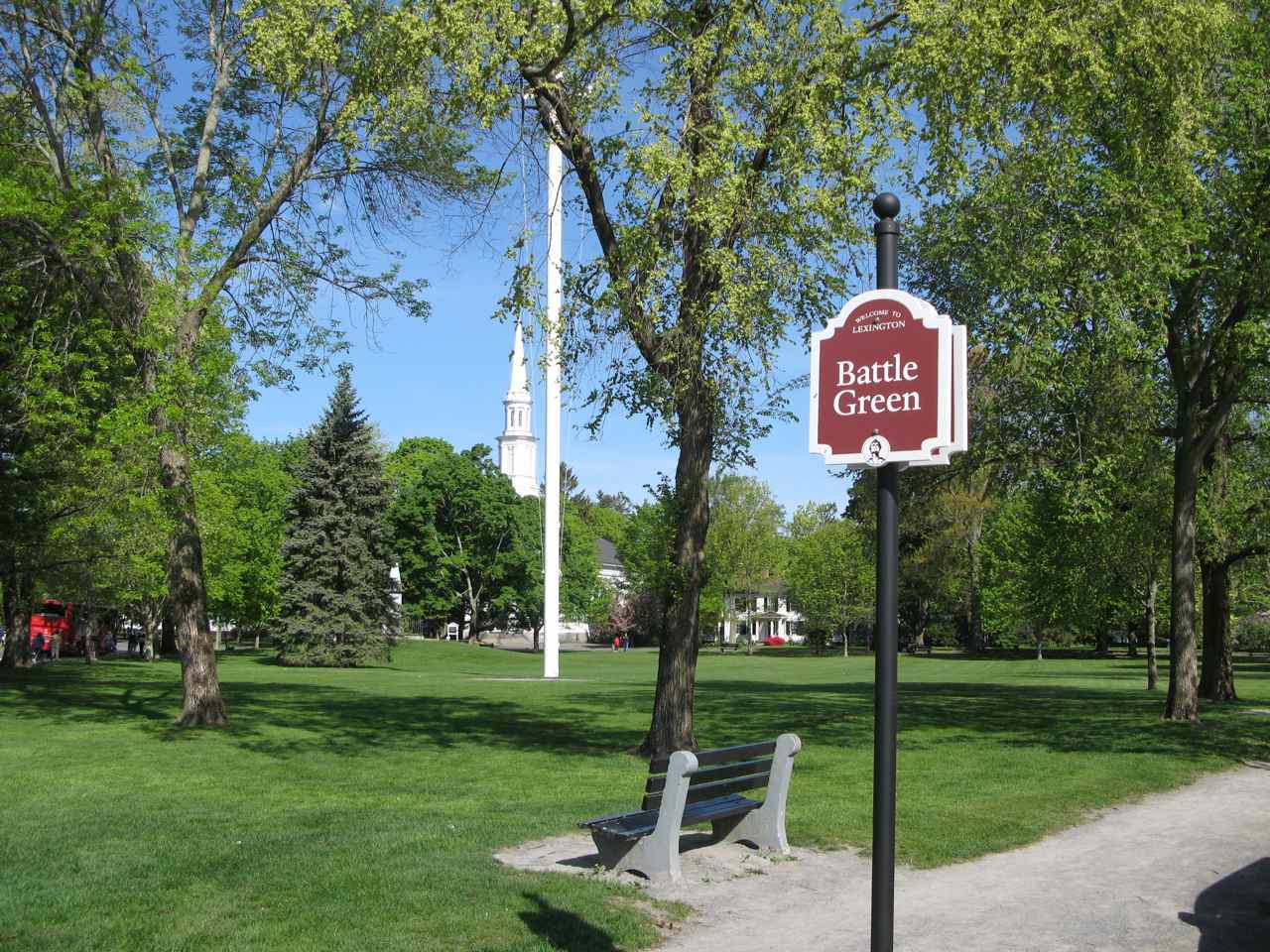
An uneasy Independence Day

July 4, 2011

I wandered down to Lexington’s town center this afternoon. In honor of July 4th, American flags on sturdy wooden poles lined both sides of Massachusetts Avenue. The usual tourists, picnickers, and frisbee-throwers were on the Battle Green, enjoying a sunny Monday holiday. Some visitors paused to snap photos of Henry Hudson Kitson’s iconic statue of Captain John Parker while other out-of-towners congregated at the Revolutionary monument, erected in 1799, to read its inscription honoring the Minutemen.

Lexington, MA

I couldn’t help thinking that this Independence Day seemed somewhat different, coming at a time of national discontent and of widespread uneasiness about the direction of the country. Usually upbeat Americans are worried: in some polls, a majority say that their children will not achieve the same quality of life; many believe the country’s best days are past; there’s anxiety about prolonged high levels of unemployment and in the aftermath of the Great Recession concerns about a long-term economic decline for the U.S. Few have confidence in the country’s leadership, Republican or Democrat.

It’s not just our political leaders who are failing us. The Boston Globe carried two stories Saturday about significant ethical missteps by senior Harvard faculty members. A front page story reported that three Harvard Medical School physicians had been sanctioned for violating conflict of interest rules by not disclosing millions of dollars in consulting fees from drug makers. Another Globe story detailed the unsavory connection between Monitor Group, a consulting firm founded by Harvard professors, and Libyan strongman Moammar Khadafy. By its own admission, the firm ran a stealth public-relations campaign for Khadafy’s regime between 2006 and 2008 that included “payments to a raft of intellectuals and public figures who visited Libya.”

Personal enrichment—or what used to be called greed—seems to have been a motivating factor in both cases, trumping values like professional integrity and disciplinary ethics, not to mention common sense (What clear-thinking person would get involved with a madman like Khadafy?). Sadly, the Harvard professoriate isn’t alone in its abandonment of traditional values; moral lapses by our leaders have become all too commonplace.

In one key arena, American elites haven’t failed of late: they have perfected the art of self-advancement, along with adopting a quick-money ethos. The growing income gap in the U.S. reflects, in part, this quest for money, power, and (more recently) celebrity. American CEOs collect vast sums of money, even as their corporations stumble and lose value. Hedge fund managers and Wall Street speculators make overnight fortunes for “financial reengineering.” The legal profession hasn’t been shy about sharing in the prosperity (deserved or otherwise) of its clients. Even those in professions known in the past for service have sought—under the principle of “keeping up with the Jones”— to improve their lot: doctors, nonprofit executives, college presidents, and journalists have all seen their compensation levels soar in the past few decades.

It’d be hard to begrudge awarding elites outsized compensation if—and it’s a big “if”—we could see that they’d earned it. But can anyone say that our corporations are better run? Or that Wall Street machinations have helped expand our economy? Or that our nonprofits and institutions of higher learning are doing a better job of meeting their missions? The gap between promise and performance isn’t lost on average Americans; those same public opinion surveys show respect for businessmen, lawyers, journalists, and bankers remains low. (Only military officers and nurses are widely seen as honest and ethical).

The clearest disconnect between American elites and Americans in general is found in our governance. There is the belief held across the ideological spectrum that politicians, whether in Washington or in statehouses around the country, have not been serving the public interest. Instead, they have looked first to their own interests (reelection, special perks, a generous government pension) or to pleasing their top contributors. They have shied away from making hard choices. (Not surprisingly, members of Congress and lobbyists join car salespeople at the bottom of the Gallup survey list for honesty and ethical standards.)

The Tea Party movement that emerged in 2009 represents a populist response to this gap between what Americans expect from their elected officials and what they have been getting. It’s a mistake to see Tea Party activism as solely aimed at President Obama and liberal Democrats—the anger has also been directed at establishment Republicans who have voted for an unparalleled run-up in federal spending over the past decade (much of it for three unpopular wars, it should be noted) despite campaign promises to rein in Big Government.

The challenges we collectively face on Independence Day 2011—a looming deficit, faltering employment growth, growing income inequality, partisan bickering, and concerns about our future place in the world economy—are all surmountable (and certainly no more daunting than the challenges of 1775, 1860, 1929, 1941 or 1980). Yet they will require our leaders to put country first and personal interests second. They will require shared sacrifices. And those entrusted with power—in all sectors, public, private, and nonprofit—will need to lead by example. Whether American elites are willing and able to accept personal accountability and return to an ethos of stewardship is—today—an unanswered question.


Copyright © 2011 Jefferson Flanders
All rights reserved

A close-run thing: winning the American revolution

The success of American revolutionaries in wresting independence from Great Britain today carries an aura of inevitability. Nothing could be further from the historical truth. In fact, on several occasions early in the conflict the Continental Army came within hours of total defeat on the battlefield. The eventual outcome of the revolution was, to borrow a Britishism, a close-run thing.

It requires a leap of imagination for 21st century Americans to understand how desperate the situation on the ground was for the revolutionaries in the first years of the insurrection. The Continental Army survived three very close calls—at Bunker Hill, Brooklyn Heights, and Trenton—where the outcome hung in the balance. Only a combination of tactical mistakes by the King’s generals, General George Washington’s skill at extricating the Americans from tight spots, and a fair measure of luck kept the revolutionaries from suffering a military debacle that would have ended effective organized resistance to the Crown.

British mistakes at Bunker Hill

The British squandered an opportunity to inflict a devastating defeat on the American army at the Battle of Bunker Hill in June 1775. General Thomas Gage chose a frontal assault on the rebel forces occupying the Charlestown peninsula’s high ground. Gage ignored the advice of perhaps his most astute general, Henry Clinton, who argued for landing troops north of Bunker Hill, behind the main position of the rebels, and occupying Charleston Neck, the narrow isthmus between the Charles River and the Mystic River connecting Charlestown to the mainland. That move would have would cut off supplies to the entrenched colonials and closed off any avenue of escape. Gage was apparently more interested in avenging his losses at Lexington and Concord and in teaching the rebels a corrective lesson about British military might than in producing a swift, and relatively bloodless, surrender.

Clinton later wrote: “Mr. Gage thought himself so well informed that he would not take any opinions of others, particularly a man bred up in the German school, which that of America affects to despise…These people seem to have no idea of any other than a direct [attack].” (Clinton thought of himself as belonging to the “German school” because he had served under Prince Ferdinand of Prussia and the Duke of Brunswick.)

bunker_hill

Instead of the bloody frontal assault chosen by British commander Thomas Gage, General Clinton argued for cutting off American forces by capturing Charlestown Neck, the isthmus north of Bunker Hill. (Source: earlyamerica.com.)

Rejecting Clinton’s counsel, Gage elected for an amphibious assault and ordered Major General William Howe to lead light infantry and marines against the entrenched Americans on Breed’s Hill. With thousands watching from the surrounding hills and roof-tops of Boston, the British marched uphill into withering fire from the Continental forces. Instead of quickly breaking the American line, it took three attempts and staggering losses before Howe’s troops could dislodge the Continentals.

Although they forced the rebels from the high ground, the British lost their chance to deal the rebellion a possibly fatal blow in its infancy. Further, American irregulars showed they were capable of standing up against Europe’s finest infantry. Clinton’s telling verdict on British success: “A dear bought victory, another such would have ruined us.”

Washington’s Brooklyn escape

The second near-disastrous moment for the Americans came in August 1776. The Continental Army, now led by George Washington, had been routed in the Battle of Long Island. More than half of Washington’s army, and most of his general staff, retreated to fortifications on Brooklyn Heights, which left them trapped between British and Hessian troops and the East River. General Howe, now commanding the British forces, ignored the entreaties of Clinton and General John Vaughn for an all-out assault on the American line and instead settled on more methodical siege tactics.

Washington recognized the precariousness of the American position. A steady north wind kept Royal Navy warships from moving up the East River and sealing off his evacuation route to Manhattan, but there was no guarantee it would persist. Observing from aboard the frigate HMS Rainbow in New York Harbor, Captain George Collier wrote in his diary: “If we become masters of this body of rebels (which I think is inevitable), the war is at an end.”

In what proved to be a master stroke, Washington ordered the secret night-time evacuation of the American forces across the East River. A flotilla of boats ferried the soldiers to Manhattan, and a late summer fog helped mask the movement of the army. Even then, it was touch-and-go. British pickets arrived at the landing just as the last boats, with the American rearguard, including Washington, embarked for New York. “In the history of warfare, I do not recollect a more fortunate retreat,” Benjamin Tallmadge, then a major on Washington’s staff, later observed.

A frustrated Captain Collier blamed Howe for the escape of the rebels, sarcastically noting: “The having to deal with a generous, merciful forbearing enemy who would take no unfair advantages must have been highly satisfactory to General Washington…” The Americans also recognized that their last-minute salvation was due, in part, to Howe’s passivity. General Israel Putnam commented: “General Howe is either our friend or no general. He had our whole Army in his power…and yet suffered us to escape without the least interruption…Had he instantly followed up his victory, the consequence to the cause of liberty would have been dreadful.” Washington, also puzzled by Howe’s tactics, wrote: “There is something exceedingly mysterious in the conduct of the enemy.”

Some historians have conjectured that Howe, who had seen the carnage inflicted by Continental muskets and rifles at Bunker Hill first hand, was wary of mounting another frontal attack. Howe later defended his tactics, explaining that the American “lines must become ours at a very cheap rate by regular approaches” and “I would not risk the loss that might have been sustained in the assault.”

Others have speculated that as a Whig sympathetic to the colonial cause, Howe hoped to see the dispute between the colonists and Great Britain settled peacefully rather than on the battlefield. Charles Stedman, a British officer, attributed Howe’s cautious New York campaign to “the reluctance of the commander in chief to shed the blood of a people so nearly allied.” Howe had been given the authority, along with his brother, Admiral Richard Howe, to extend pardons to the colonial leaders if they abandoned their rebellion, an offer swiftly refused. (Connecticut’s Jonathan Trumbull, the only incumbent colonial governor to support independence, tartly observed that “[n]o doubt we all need a pardon from Heaven for our manifold sins and transgressions; but the American who needs the pardon of his Britannic Majesty is yet to be found.”)

george washington, 1776

Charles Willson Peale portrait of George Washington, composed during the summer of 1776. (Source: georgewashingtonwired.org.)

Whatever Howe’s reasons, after the near-disaster at Brooklyn Washington realized that he could not risk set-piece battles between his raw troops and seasoned British and Hessian veterans. His message to Congress days after the evacuation outlined the Fabian tactics he would successfully employ for the remainder of the conflict. “On our side the war should be defensive,” he wrote. “We should on all occasions avoid a general action, and never be drawn into a necessity to put anything to risk.”

Trenton: Washington eludes a trap

The third decisive moment came shortly after Washington’s stirring victory over the Hessians at Trenton on December 26, 1776 had revived the flagging revolutionary cause. The Continental Army had quickly returned to Pennsylvania, but days later Washington re-crossed the Delaware to begin a campaign against the British outposts in New Jersey.

British forces led by Lieutenant General Charles Cornwallis marched from Princeton to confront him in Trenton on January 2, 1777. After a series of skirmishes (the Second Battle of Trenton), by late in the afternoon the Americans had moved to positions along the Assunpink Creek, with the British to their north and the Delaware River to their west. Ice on the river blocked any escape by boat, so a Brooklyn-like evacuation would not be possible.

“The damned rebels are cornered at last,” Cornwallis told an officer on his staff. His quartermaster, William Erskine, urged a twilight attack: “If Washington is the general I take him to be, he will not be found there in the morning.” But Cornwallis decided to wait; it was growing dark, his men were tired from a long march on muddy roads, and initial assaults had met stiff resistance. He could see that the Continental lines extended three miles along the Assunpink and that if he turned the left flank of the Americans to the east, he could close the trap, pinning the insurgents with the Delaware at their backs. Legend has it that Cornwallis boasted: “We’ve got the old fox safe now. We’ll go over and bag him in the morning.”

assunpink

Washington escaped the trap at Trenton by secretly sending American forces around the left flank of the British in the middle of the night and then moving north up the back roads across Quaker Bridge to Princeton. (Source: britishbattles.com.)

Washington saw the danger. While he had roughly the same number of troops as Cornwallis (roughly 5,000 men), he had little, if any, room to retreat. After a council of war, Washington decided on a bold move: surreptitiously maneuvering around the British left flank, in the middle of the night, and then falling upon the rearguard Cornwallis had left behind in Princeton. A small decoy force of Americans kept the campfires burning, while Washington’s troops began their march north. The daring plan worked. Colder weather froze the roads and the rebels were able to steal away without alerting the British. Cornwallis did not realize the “old fox” had side-stepped the trap until he heard the sound of cannons from the battle in Princeton in the morning.

Washington’s unexpected successes at Trenton and Princeton came at a crucial juncture in the war. They kept American hopes alive until a pivotal victory at Saratoga over Gentleman Johnny Burgoyne in the fall of 1777 encouraged the French to enter the conflict on the side of the colonists. Washington’s reputation as a general soared both at home and abroad; English politician and man-of-letters Horace Walpole wrote that “[h]is march through our lines is acknowledged to have been a prodigy of generalship” and compared the American commander to the Roman generals Fabius and Camillus.

Victory against the odds

Like many who have been through a near-death experience, America’s revolutionaries tried to make sense out of what had happened to them. It’s no surprise that many of the Founders saw a providential hand at work in their miraculous deliverance from the jaws of defeat.

How else to explain the success of their “rabble in arms” against the mightiest army and navy of the 18th century? Or the strange weather—wind, rainstorms, and fog—that allowed Washington and his men to escape across the East River? Or the sudden freeze that made the back roads from Trenton to Princeton passable for the Continental army? Or the numerous times that Washington avoided capture or death on the battlefield?

Washington wrote years after the war: “The man must be bad indeed who can look upon the events of the American Revolution without feeling the warmest gratitude toward the great Author of the Universe whose divine interposition was so frequently manifested in our behalf.” Benjamin Franklin abandoned his Enlightenment skepticism when reflecting on the triumph of the revolutionary cause. “All of us who were engaged in the struggle must have observed frequent instances of a Superintending providence in our favor,” he told fellow delegates at the Federal Convention of 1787. “I have lived, sir, a long time, and the longer I live, the more convincing proofs I see of this truth, that God governs in the affairs of men.”

Yet it’s not necessary to believe in predestination, or in divine intervention, to marvel at the perseverance of the American revolutionaries and their sacrifices to achieve victory against very long odds. What makes their triumph even more remarkable is what so nearly came to pass—and didn’t—in those decisive early “what if” moments.


Copyright © 2011 Jefferson Flanders
All rights reserved
Drone Wars

Reprinted from Washington Decoded, January 2010

MADRID, 12 March 2013 (or 2017) – Former US President Barack Obama today abruptly canceled a scheduled trip to Spain after learning that he might be arrested on war crimes charges stemming from past American drone attacks on Al Qaeda leaders. The Nobel Peace Prize winner postponed his planned address to Madrid University students after judge Baltasar Garzón, acting on a request by human rights lawyers, issued arrest warrants for Obama and former CIA Director Leon Panetta under the legal doctrine known as “universal jurisdiction.” It allows for the local prosecution of grave human rights crimes regardless of where they were committed.

Amnesty International, Human Rights Watch, and the United Nations Human Rights Council (UNHRC) have all condemned US “Predator” and “Reaper” strikes on Al Qaeda and Taliban members as illegal extrajudicial executions, and have characterized collateral civilian deaths as a violation of international human rights law.

Does this scenario seem far-fetched? It’s not.

US government officials face the real possibility of future arrest and trial in Europe over Washington’s “drone war” in Pakistan—the targeted killing of Al Qaeda and Taliban leaders using missiles fired from remotely-controlled Predator and Reaper aircraft (or UCAV, for Unmanned Combat Aerial Vehicles in military jargon). And the problem underscores a fundamental deficit in US policy since 2001: an inability or unwillingness by Washington to directly confront the limitations of international law in dealing with terrorism in the post-9/11 world.

The use of drones in regions where US forces are not declared combatants represents, in a nutshell, many of the moral and legal quandaries the United States has struggled with since 9/11. If the conflict with Al Qaeda is a war without borders, then targeted killings are scarcely different than taking down a combatant in any war. But if a state of armed conflict doesn’t exist, or if targeted killings aren’t regarded as a legitimate act of self-defense, then these attacks violate current international law.

Looking at it another way, if Khalid Sheikh Mohammed (KSM), the mastermind behind 9/11, were driving in the Pakistani tribal areas in a Land Rover today, according to US policy, it would be entirely legitimate to put him in the cross-hairs of a lethal drone. Instead, he is slated to stand trial in New York where he will be presumed innocent and where the emphasis will be on proving his guilt. Theoretically at least, KSM could walk out of court a free man.

This inexplicable contradiction underscores the inability of the United States and the world community to devise new legal conventions in the wake of 9/11. An internationalist-minded president would seek to shape international law to present conditions, rather than continually bending the law until it snaps back, with unintended consequences.

Continue reading “Drone Wars”…

Tom Rob Smith’s The Secret Speech and the Stalinist past

On February 26, 1956, Nikita Khrushchev, the then-leader of the Soviet Union, addressed a closed session of the 20th Communist Party Congress and denounced the cult of personality of his predecessor, Josef Stalin. Khrushchev’s “Secret Speech” was a four-hour long condemnation of Stalin’s myriad abuses of power, a shocking and detailed indictment of the dictator’s crimes delivered just three years after his death.

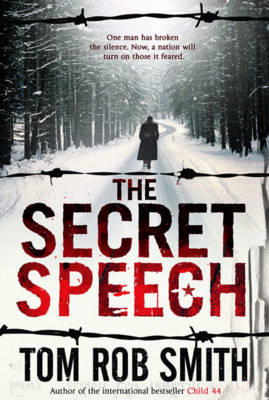
The Secret Speech

British author Tom Rob Smith’s new historical thriller The Secret Speech (Grand Central Publishing) traces the ripple effects of Khrushchev’s denunciation of the “pockmarked Caligula” (to use Boris Pasternak’s chilling description), and explores how those revelations profoundly altered the lives of both persecutors and persecuted in the totalitarian state Stalin had fashioned.

While Khrushchev tried to narrow the focus to Stalin and his depraved comrade Lavrenty Beria, the chief of secret police (and serial rapist of young girls) who was executed after Stalin’s death, there was broad complicity in the horrors of Stalinism, beginning with Communist Party elites. Hundreds of thousands, if not millions, of people in the Soviet national security apparatus aided in the torture, abuse, summary execution, and unjust imprisonment of their fellow citizens. Some were willing accomplices in the purges and show trials, convinced that they were defending against subversion by enemies of the state. Others collaborated or informed out of fear or self-interest. The exposure of Stalinism’s systemic perversion of justice shattered the faith of true believers around the world (the American Communist Party was devastated by the revelations). They discovered that they been lied to for decades about the “necessary evil” of Stalin’s repression—it served not to advance scientific socialism, but to consolidate the power of a paranoid tyrant.

Shocking the system

The Secret Speech is set just after Khrushchev’s shock to the system, and Smith dramatizes its effects through the story of Leo Demidov, a hero of the Great Patriotic War and former MGB officer (and the protagonist of Smith’s bestselling debut novel, Child 44). As the book opens, Demidov is working as a homicide detective in Moscow, a job that brings him into contact with all levels of Soviet society and lets us watch as word of Khrushchev’s revelations quickly spreads. (The conceit—a skeptical Russian insider/outsider with police powers—is a familiar one: Martin Cruz Smith’s character Arkady Renko, also a detective, memorably explored the contradictions of Soviet life in Gorky Park and a follow-on series of thrillers.)

Leo hopes that his new position will help him make amends for his own culpability in the abuses of the past. He and his wife Raisa have adopted sisters, Zoya and Elena, in part because Leo failed to stop the murder of their parents by one of his MGB subordinates. On his self-chosen path to redemption, Leo discovers that some victims are not ready to forgive. Fraera, a woman Leo had helped wrongly condemn to the Gulag along with her husband as enemies of the state for their religious activities, has returned to Moscow, joined the vory v zakone (“thieves in law”), (the tattooed Russian mafia so vividly depicted in director David Cronenberg’s movie Eastern Promises), and has targeted Demidov for vengeance. To protect his family, Leo must journey to the Kolyma region (the Gulag’s “pole of cold and cruelty” according to Alexander Solzhenitsyn) and attempt, against long odds, to liberate Fraera’s still-imprisoned husband, Lazar.

Smith paints a vivid portrait of the bleak, unforgiving world of the forced labor camps in Siberia. Leo’s scheme to infiltrate Gulag 57 and free Lazar goes awry when his true identify is discovered; only a camp uprising triggered by news of Khrushchev’s speech saves Demidov from immediate reprisal at the hands of the prisoners. In one of the novel’s most arresting scenes, Gulag 57’s commander Zhores Sinyavksy faces a makeshift court convened to pass judgment on his treatment of the imprisoned. Sinyavksy pleads his case in vain—he receives a just, but not merciful, sentence from the convicts before Red Army tanks end their brief moment of freedom.

In seeking to craft a suspenseful page-turner, Smith relies on too many unbelievable twists and turns to advance the narrative of The Secret Speech. A final plot contrivance that brings Leo and Raisa to Budapest to witness the Hungarian revolution in the fall of 1956 is particularly awkward. Smith invents a conspiracy—Kremlin hardliners sending agent provocateurs to Hungary to spark the uprising and justify a crackdown by a resurgent Soviet military—that doesn’t pass historical muster. In fact, the Hungarian revolt represented an authentic expression of discontent by a coalition of intellectuals, students, and workers. It was a development that took the Soviet hierarchy by surprise. The broad popular support for the uprising and the participation of young educated Hungarians posed an existential challenge to Marxist-Leninist ideology which had maintained that such classless solidarity could only develop under Communism.

Budapest 1956 also caught the West off guard. Tim Weiner notes in Legacy of Ashes: The History of the CIA, the American intelligence establishment was clueless, without a network or agents on the ground: “During the two-week life of the Hungarian revolution, the agency knew no more than what it read in the newspapers…Had the White House agreed to send weapons, the agency would have had no clue where to send them.” American involvement was limited to misleading Radio Free Europe broadcasts that raised false hopes of Western intervention.

Despite its over-plotting, The Secret Speech is compelling in its depiction of the first halting steps away from Communism. Leo’s difficult journey from dedicated secret policeman to clear-eyed survivor mirrors in personal terms the beginning of that transformation. The moral reckoning isn’t easy. Some of his MGB colleagues cannot live with their guilt. Careerists and opportunists have less difficulty adjusting to the new order. Others in the bureaucracy calculate the risks of embracing reform should de-Stalinization prove temporary and the ground under them shift once again.

Stalin’s legacy?

The Khrushchev Thaw proved to be a partial one. The Kremlin maintained Stalinist security measures throughout the Soviet empire for another three decades. Indeed, nearly twenty years after the collapse of the Soviet Union, the former KGB agent who controls the Russian government has shown little appetite for any “truth and reconciliation” process that might comprehensively address the horrors of Stalinism. Some Russians still long for the days of Stalin. In a disturbing sign of this revisionist nostalgia, Stalin was voted the third most popular Russian historical figure in a poll by the Rossiya state television channel in December 2008.

Historical myopia isn’t confined to the Russians. In his Los Angeles Times review of Smith’s novel, Michael Harris compared Stalinist collaborators with Americans today, noting: “…with hardly a repercussion to be afraid of, those who opposed Bush-era policies are acquitting themselves no better, while hard-liners such as Dick Cheney continue to warn that too much concern for civil rights will risk another 9/11.” Harris failed, however, to specify the heroic acts of resistance that he thought Code Pink and other liberal-left opposition groups should have employed during the Bush years. Yes, it’s hard to believe that even someone suffering from such a clear case of Bush Derangement Syndrome could compare Stalin’s Soviet Union to George W. Bush’s America, but, as baseball great Casey Stengel used to say, you can look it up.


Copyright © 2009 Jefferson Flanders
All rights reserved
Ernest Hemingway’s “Hills Like White Elephants”: icebergs, raisin bread, and the short story

What makes Ernest Hemingway’s “Hills Like White Elephants” so intriguing even some eight decades after its publication is how this brief story illustrates some of Hemingway’s literary rules of thumb in practice. It features Hemingway’s clean, plain-style prose (“My aim is to put down on paper what I see and what I feel in the best and simplest way”); his “iceberg principle” of omitting detail and forcing the reader to decode the story; and his belief that symbols should be naturally baked into a narrative (like, he once wrote, plain bread) and should not stick out “like raisins in raisin bread.”

Ernest Hemingway

Hemingway was always conflicted about matters literary. On the one hand, his contrived “author-as-action hero” persona hampered extended discussions of literary theory. After all, why would a naturally-gifted author ever pay attention to such effete concerns? So Hemingway often maintained that authentic writing meant translating emotional experience onto the page: “There is nothing to writing. All you do is sit down at a typewriter and bleed.”

Yet Hemingway cared deeply about his literary reputation (see, for example, his dismissal of rivals F. Scott Fitzgerald and Ford Maddox Ford and his aggrandizing self-portrait in A Moveable Feast) and recognized that he had to advance some “theory of writing” to engage and satisfy his academic critics. In many ways he shared the attitude of the Beatles’ John Lennon, who mocked music critics for writing “intellectual bullshit” about his songs but acknowledged such interpretations served to establish the group’s mythology (“Still, I know it helps to have bullshit written about you.”)

There’s an air of contrivance about “Hills Like White Elephants”—as if Hemingway had one eye on the critics when he sat down at the typewriter. His choice of topic for the story—a young couple arguing over whether the woman should have an abortion—had significant shock value in the late 1920s when abortion was universally illegal and a taboo subject. And shocking the respectable (“épater la bourgeoisie“) had been a strategy for establishing artistic credibility since Baudelaire and Rimbaud, one Hemingway clearly wasn’t above employing.

The iceberg principle

“Hills Like White Elephants” is well-crafted: Hemingway’s bare prose and taut dialogue pull us into the story, and he shares just enough about the couple to keep us interested. This omission of detail represents a deliberate literary technique, as Hemingway once acknowledged in Death in the Afternoon:

If a writer of prose knows enough about what he is writing about he may omit things that he knows and the reader, if the writer is writing truly enough, will have a feeling of those things as strongly as though the writer had stated them. The dignity of movement of the iceberg is due to only one-eighth of it being above water. The writer who omits things because he does not know them only makes hollow places in his writing.

His somewhat mystical view that “the reader, if the writer is writing truly enough, will have a feeling of those things as strongly as though the writer had stated them” could perhaps be more accurately phrased as “the reader, if the writer is leaving enough clues and hints, will have a feeling of those things as strongly as though the writer had stated them.” (That readers would recognize “hollow places” in the writing when the writer was omitting out of ignorance is, plainly put, nonsense.)

Throughout “Hills Like White Elephants,” Hemingway provides plenty of clues while deliberately withholding key details. We never learn the name or occupation of the male protagonist. There are no physical descriptions of the couple. We must piece together the facts of their predicament from their disjointed conversation.

Yet there is enough of the iceberg showing to give us a good sense of what is going on: the girl, Jig, is resisting the American’s pressure for the abortion. She has begun to question the emptiness of their lifestyle (“That’s all we do, isn’t it – look at things and try new drinks?”) and the sincerity of his feelings for her. It’s clear that Jig can envision a different, happier future (prefigured by the natural beauty around them), but she realizes her lover doesn’t share that vision.

The girl stood up and walked to the end of the station. Across, on the other side, were fields of grain and trees along the banks of the Ebro. Far away, beyond the river, were mountains. The shadow of a cloud moved across the field of grain and she saw the river through the trees.

“And we could have all this,” she said. “And we could have everything and every day we make it more impossible.”

The resolution of “Hills Like White Elephants” is famously ambiguous. Literary critics have argued over whether Jig agrees to the American’s demands and takes the train to Madrid for the abortion, whether he will leave her after the operation, or whether, in the end, she will resist his entreaties and bear the child to term (the most unlikely outcome). (Nilofer Hashmi has an excellent summary of the varying theories in her essay “‘Hills Like White Elephants’: The Jilting of Jig“).

Plain or raisin?

Unlike some of Hemingway’s more naturalistic stories (for example, “Fifty Grand” or “The Killers”), “Hills Like White Elephants” is more overtly reliant on symbolism. Later in his career, Hemingway talked about the question of symbolism in a Time magazine interview in 1954:

“No good book has ever been written that has in it symbols arrived at beforehand and stuck in. That kind of symbol sticks out like raisins in raisin bread. Raisin bread is all right, but plain bread is better.”

No doubt Hemingway’s intent in “Hills Like White Elephants” was to offer “plain bread” symbolism—in practice, however, the result feels more like “raisin bread.” Hemingway starts the story with a stripped-down description of the Ebro valley’s landscape and has Jig introduce her poetic simile about the “line of hills” that “were white in the sun”—with its heavy symbolic freight— in the ninth paragraph.

“They look like white elephants,” she said.

“I’ve never seen one,” the man drank his beer.

“No, you wouldn’t have.”

“I might have,” the man said. “Just because you say I wouldn’t have doesn’t prove anything.”

Hemingway makes extended use of the simile, explicitly linking this conceit to the underlying conflict between the American and the girl. The hills, of course, can be read as symbolic of fertility and the Jig’s unborn baby can be regarded as a white elephant—a valuable but too costly possession that is hard to dispose of. Her lover’s irritation with her repeated references to the “white elephants” reflects his rejection of any alternative to what he wants her to do. When Jig abandons the simile, it signals that she will comply with his wishes.

“They’re lovely hills,” she said. “They don’t really look like white elephants. I just meant the coloring of their skin through the trees.”

Some critics have focused on additional symbols in the story—from the meaning of Jig’s name to the symbolism of the beaded curtain to the significance of the hotel stickers on the couple’s baggage. While some of these readings are far-fetched, Hemingway did, consciously or unconsciously, provide plenty of ambiguous “raisins” with room for interpretation.

Too clever by half?

It’s possible to admire the technical craft involved in “Hills Like White Elephants” and still find the story wanting on several levels. There’s a certain flatness in this vignette of a love affair gone bad; for an author often criticized for his weakly-portrayed female, Jig is—ironically enough—the more human and rounded character, while the American comes across as a narcissistic lout.

Hemingway’s writerly cleverness—the shock value of writing about abortion, the deliberate omission of detail, the heavy-handed symbolism–is too much on display in “Hills Like White Elephants.” In the end, it’s “too clever by half” and these tricks lend the story an overly calculated and mechanical feel—an irony, indeed, for a writer who prided himself on authenticity.


Copyright © 2009 Jefferson Flanders
All rights reserved

« Older posts Newer posts »

© 2026 Jefferson Flanders

Theme by Anders NorenUp ↑