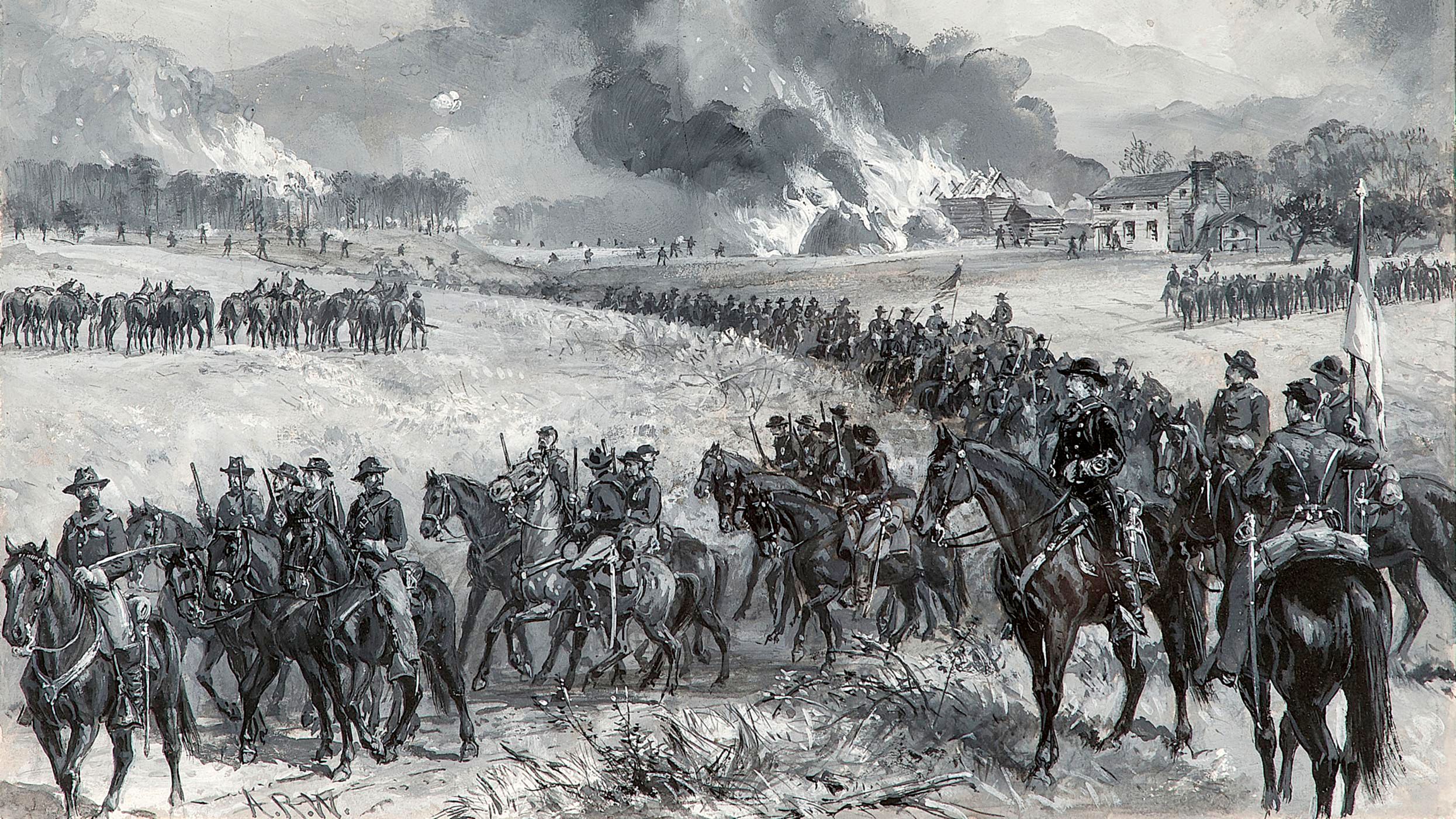
In the last few days of October, I visited the Shenandoah Valley, researching the pivotal battles of Third Winchester and Cedar Creek, which were fought during General Philip Sheridan’s 1864 campaign.
I’m writing a Civil War novel–a sequel to North to Nantucket–-and it is set in Philadelphia and the Shenandoah. As an author of historical fiction, I’ve discovered that “being there” in the place where the history happened helps in my imaginative journey into the past.
I hadn’t been in the Valley since the 1970s, but much of it is as beautiful as I remembered. (After graduating from college, I had been accepted by the University of Virginia at Charlottesville for a master’s program in English, but in the end decided against taking the academic road).
Much of the countryside looks as I imagine it did in the fall of 1864, when Union forces ranged up and down the Valley–the Breadbasket of the Confederacy–burning crops, mills, barns, and farmhouses. General Ulysses S. Grant had ordered this campaign of devastation, hoping to cut off supplies to the Confederate Army defending Richmond. General Philip Sheridan tasked the Boy General–George Armstrong Custer–and his Third Cavalry Division with setting the countryside on fire. During The Burning, as it was dubbed by the locals, columns of smoke rose in the skies for miles and miles. Today, those October skies are a vivid and peaceful blue.
The site of the Cedar Creek battle, which includes the lands surrounding Belle Grove plantation, has been well preserved as a national park. Walking the battlefield, it’s possible to envision the contending Federal and Confederate forces sweeping across the meadows in the ebb and flow of battle. The extent of the battle lines suggests the scale of the fight: some 47,000 combatants were engaged in combat, with nearly 8,000 casualties.
There are concrete reminders of the reasons for the bloodshed. Hundreds of slaves worked at the Belle Grove plantation for the Cooley family. They lived in cramped quarters distanced from the majestic manor house with its Tuscan-style columns. Hundreds of the enslaved were buried in a separate cemetery. At its heart, the fight at Cedar Creek was over slavery.
In the Upper Valley, the city of Winchester’s Old Town is full of Civil War history. Local historians claim the city changed hands between Federal and Confederate forces 72 times, an exaggerated total that includes temporary control by the adversaries during the six battles fought there. As a thriving market town in a strategic location, Winchester was occupied by Union troops several times and was headquarters for General Philip Sheridan from the fall of 1864 until February 1865.
The Shenandoah Valley Civil War Museum, located in Old Town, occupies what used to be the county courthouse. (It was home base for Richard Parker, the judge who presided over John Brown’s trial for the Harpers Ferry uprising in 1859). The Greek Revival building served as a barracks, hospital, and prison for Union and rebel forces during the war.
The museum has an outstanding collection of artifacts and displays, including the graffiti (signatures, inscriptions, and drawings) left on the walls of the building by imprisoned soldiers. Unfortunately, the memorial statue in front of the museum of a Confederate soldier traffics in classic Lost Cause propaganda. The inscription notes that such soldiers were “loyal to the South,” ignoring their betrayal of their country.
One of the museum docents told me that the Confederate statue had been defaced by spray painting several times. As with the public disputes over statues of Robert E. Lee and Stonewall, it reminds us of the symbolic power of historical memory. I don’t find battlefield memorials to fallen rank-and-file Confederates (such as the ones at Gettysburg) objectionable; I do think statues of the “heroes of the Confederacy” should be removed from public spaces–we should not celebrate the leaders of a dishonorable cause.
_________________
You can purchase North to Nantucket here.